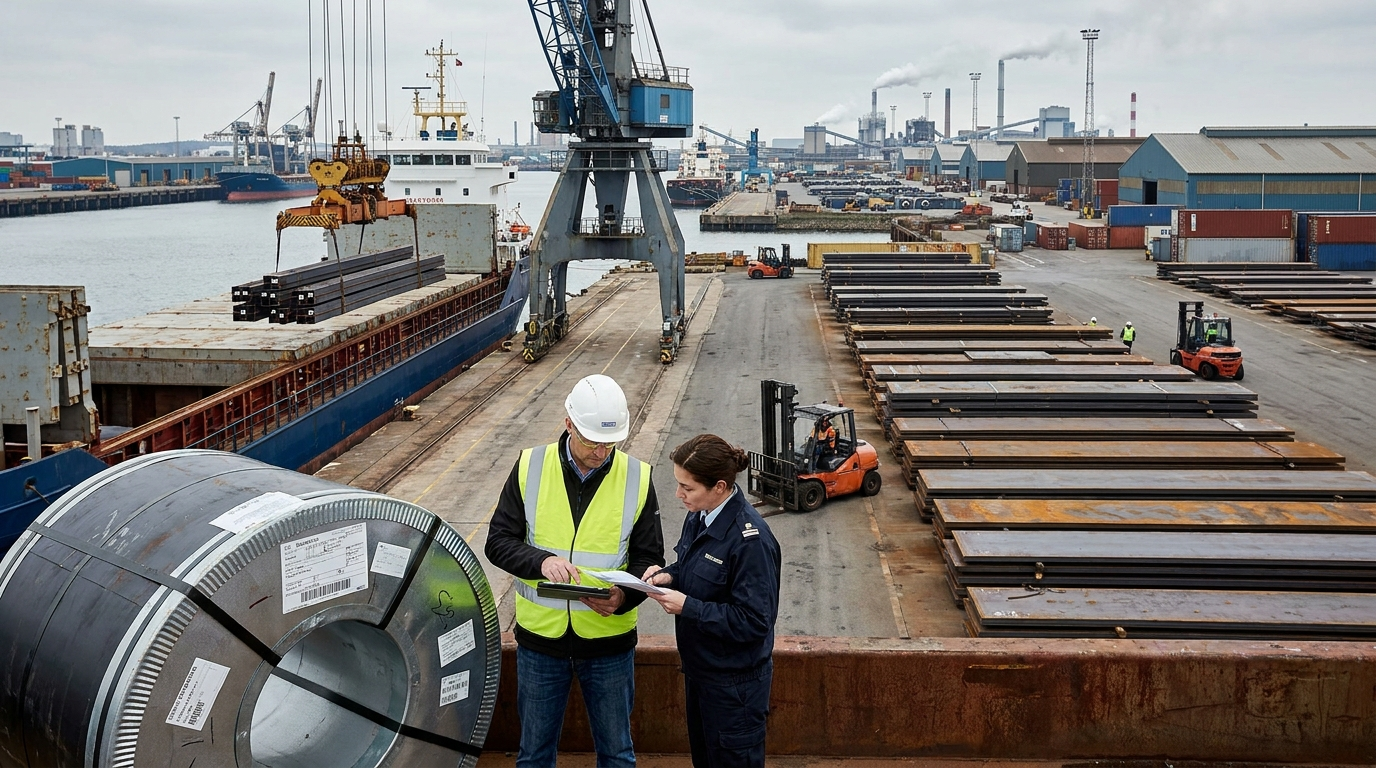
1) Softer year-to-date exports do not mean the channel has shut.
Industry reporting based on General Administration of Customs data showed that China's rolled-steel exports reached 44.6 million tonnes in January-May 2026, down 8.1% from a year earlier. That headline matters, but the detail matters more: May exports still rose to 10.3 million tonnes, up 8.9% from April. The useful commercial reading is not that Chinese steel has disappeared from export markets, but that volume is concentrating into lanes that can still clear documentation, destination, and timing risk efficiently.
基于中国海关总署数据的行业报道显示,2026 年 1-5 月中国轧钢出口总量为 4460 万吨,同比下降 8.1%。这个总量信号值得重视,但更关键的是细节:5 月单月出口仍回升至 1030 万吨,较 4 月增长 8.9%。更有价值的商业解读并不是“中国钢材出口消失了”,而是出口正在向那些仍能较高效通过单证、目的地与时效风险审查的通道集中。
2) OECD sees a market where pressure keeps rising even when trade continues.
OECD Steel Outlook 2026 says excess capacity could reach 745 million tonnes by 2028 while demand growth stays around 0.9% per year through 2030. It also notes that China shipped a record 131 million tonnes of steel in 2025. Put together, those signals explain why export availability and trade pressure can rise at the same time. Buyers may still find workable Chinese supply in plate, coil, section, or pipe, but they should expect more discrimination by product type, end market, and customs sensitivity.
OECD《2026 钢铁展望》指出,到 2028 年全球钢铁过剩产能可能升至 7.45 亿吨,而到 2030 年需求增速预计仅约为每年 0.9%。报告同时提到,中国 2025 年钢材出口创纪录地达到 1.31 亿吨。把这些信号放在一起,就能理解为什么“出口仍在继续”与“贸易压力同步上升”会同时成立。对买家而言,中厚板、卷材、型材或钢管依然可能找到可执行的中国供应,但产品类别、终端市场和海关敏感度之间的区分会越来越明显。
3) Trade friction is no longer background noise.
OECD's trade-actions chapter says the number of anti-dumping and countervailing duty measures in place reached a record 395 in 2025, up from 321 in 2024, with 113 of those actions targeting China. That changes order design. A quote that looks attractive at mill level can still become fragile if the destination has elevated remedy exposure, if the declared product path is ambiguous, or if supporting documents are not prepared tightly enough before booking and loading.
OECD 的贸易措施章节指出,全球执行中的反倾销和反补贴措施在 2025 年已升至创纪录的 395 项,高于 2024 年的 321 项,其中有 113 项针对中国。这个变化已经不是背景噪音,而是会直接重塑订单设计。即使钢厂报价本身有吸引力,如果目的地市场的贸易救济暴露度偏高、申报产品路径存在模糊空间,或者订舱装运前的支持文件准备不够扎实,这笔生意依然可能迅速变得脆弱。
4) The June takeaway is to screen by lane, not by headline price.
For June business, the disciplined approach is to separate inquiries by export lane. Structural steel, plate, flat products, and tubular goods should not automatically be grouped into the same destination basket or the same paperwork standard. The buyers most likely to execute smoothly are the ones who test route cleanliness early, confirm product classification before shipping, and treat each order as a destination-fit file rather than an interchangeable tonnage deal.
对 6 月订单而言,更稳妥的方法是按出口通道来筛分询盘。型钢、中厚板、扁平材与管材,不应默认归入同一组目的地市场,也不应套用同一套单证标准。更有可能顺利执行的买家,往往是那些更早验证路线“干净度”、在发运前确认产品归类,并且把每一票订单都视为“目的地匹配文件”而不是“可互换吨位交易”的买家。