1) May improved, but the broader export lane is still narrower than last year.
Industry reporting based on General Administration of Customs data showed that China's rolled-steel exports reached 44.6 million tonnes in January-May 2026, down 8.1% year on year. At the same time, May shipments rose to 10.3 million tonnes, up 8.9% from April. The commercial takeaway is that export flow has not disappeared, but it has become less forgiving. Buyers still have access to Chinese plate, coil, section, or pipe supply, yet the market is increasingly rewarding orders that fit the right destination, spec discipline, and documentation path.
基于海关总署数据的行业报道显示,2026 年 1-5 月中国轧钢出口总量为 4460 万吨,同比下降 8.1%;但 5 月单月发运量回升至 1030 万吨,较 4 月增长 8.9%。这说明出口流量并未消失,但可操作窗口比去年更窄。买家依然能从中国采购中厚板、卷材、型材或钢管,只是市场越来越偏向那些目的地选择更合理、规格更清晰、单证路径更干净的订单。
2) OECD is signaling a harder trade environment even when steel keeps moving.
OECD Steel Outlook 2026 says global excess capacity could reach 745 million tonnes by 2028, while demand growth remains weak. The same report says China exported a record 131.2 million tonnes of steel in 2025, accounting for 41% of world exports. That combination matters: a large export machine is still active, but it is operating in a world with slower demand absorption and sharper political reaction. For finished-steel buyers, that means price alone is no longer a safe guide. Product mix, destination sensitivity, and trade-remedy exposure now matter much earlier in the buying decision.
OECD《2026 钢铁展望》指出,到 2028 年全球钢铁过剩产能可能升至 7.45 亿吨,而需求增长仍将偏弱。报告同时提到,中国 2025 年钢材出口达到创纪录的 1.312 亿吨,占全球钢材出口的 41%。这组信号非常关键:庞大的出口机器仍在运转,但它面对的是一个需求吸收更弱、政治反应更强的外部市场。对成材买家来说,这意味着不能再只看价格,产品结构、目的地敏感度和贸易救济暴露度都需要更早纳入采购判断。
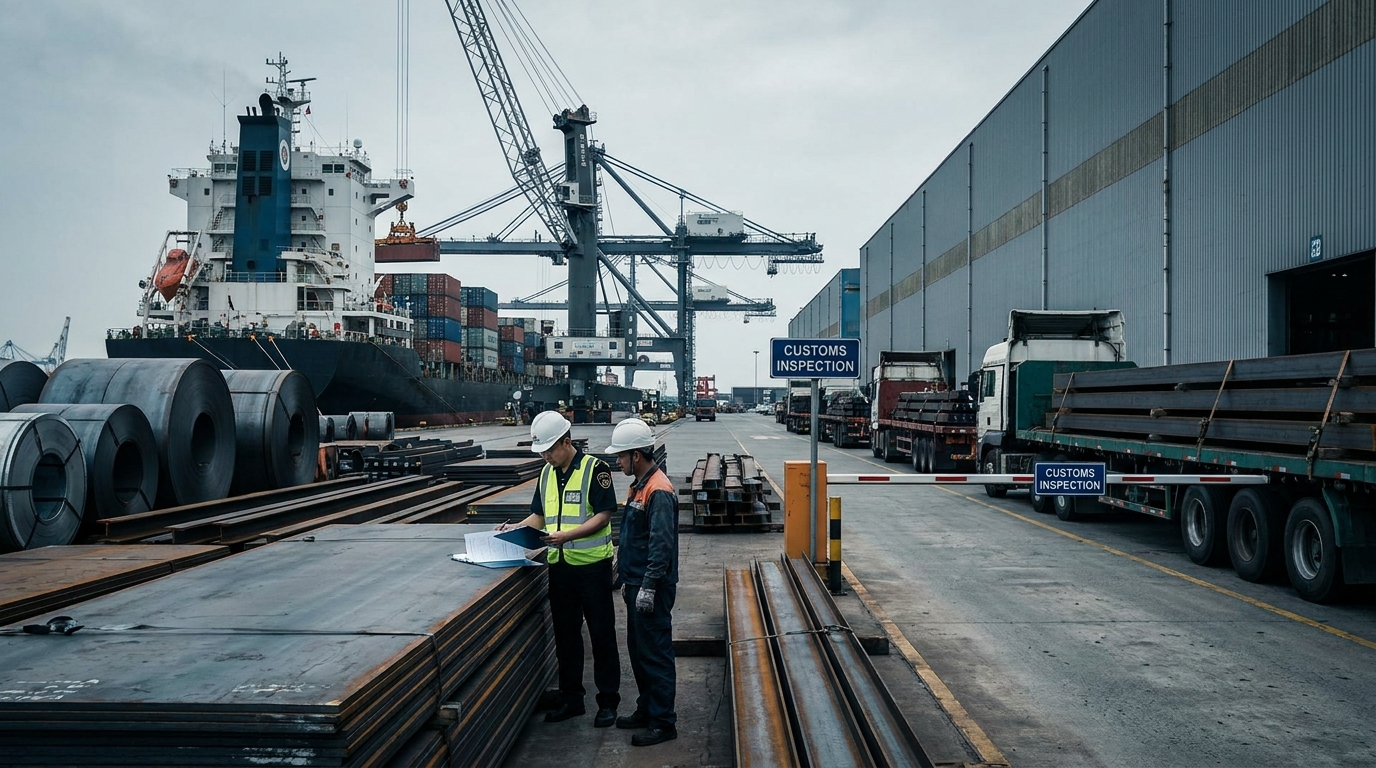
3) Ports are still supportive, but execution quality decides whether an order stays viable.
Official transport data showed China's ports handled 5.93 billion tonnes of cargo in January-April 2026, up 3.1% year on year, while container throughput reached 120 million TEUs, up 7.2%. That is an important counter-signal to the gloomier trade headlines: the physical export system is still moving at scale. However, stronger port activity does not cancel trade friction. It simply means the buyers who prepare loading windows, packaging plans, inspection points, and customs paperwork in advance are still more likely to secure a clean shipment outcome than those chasing generic low offers late in the cycle.
官方交通运输数据还显示,2026 年 1-4 月中国港口完成货物吞吐量 59.3 亿吨,同比增长 3.1%;集装箱吞吐量达到 1.2 亿标箱,同比增长 7.2%。这对偏悲观的贸易标题来说,是一个重要的反向信号:实体出口系统仍在大规模运行。但港口活跃并不等于摩擦消失,它只意味着那些能够提前规划装船窗口、包装方案、检验节点和报关单证的买家,仍然比在周期后段追逐泛低价货源的买家更容易拿到干净的发运结果。
Takeaway
The June message is straightforward: China's steel export rebound is real, but it is happening inside a market with higher trade walls and less tolerance for weak execution. Buyers should treat current availability as selective opportunity, not broad-based ease. The workable orders are the ones built around clear product-market fit, defensible destination choice, and disciplined shipment planning.
6 月的核心信号很直接:中国钢材出口回升是真实存在的,但它发生在一个贸易壁垒更高、执行容错更低的市场环境里。买家应把当前供给视为“选择性机会”,而不是“全面宽松”。真正更有把握的订单,仍然是那些建立在清晰产品匹配、可辩护目的地选择和严格发运规划基础上的交易。