1) Stronger export flow does not automatically mean easier execution.
The fact that May exports came in stronger than expected tells buyers that China still has the capacity and commercial incentive to ship. But on the ground, the pressure has shifted from finding supply to making each shipment cleaner. When cargoes are moving into more sensitive destination markets, small weaknesses in packing, marking, certification, or port timing become more expensive than they used to be.
5 月出口表现强于预期,说明中国仍然具备持续发货的能力和商业动力。但在实操层面,压力已经从“有没有货”转向“每一票货做得够不够干净”。当货物进入更敏感的目的地市场时,包装、唛头、证书或港口时点上的小问题,都会比以前更容易放大成本。
2) Shipment discipline is now part of the product offer itself.
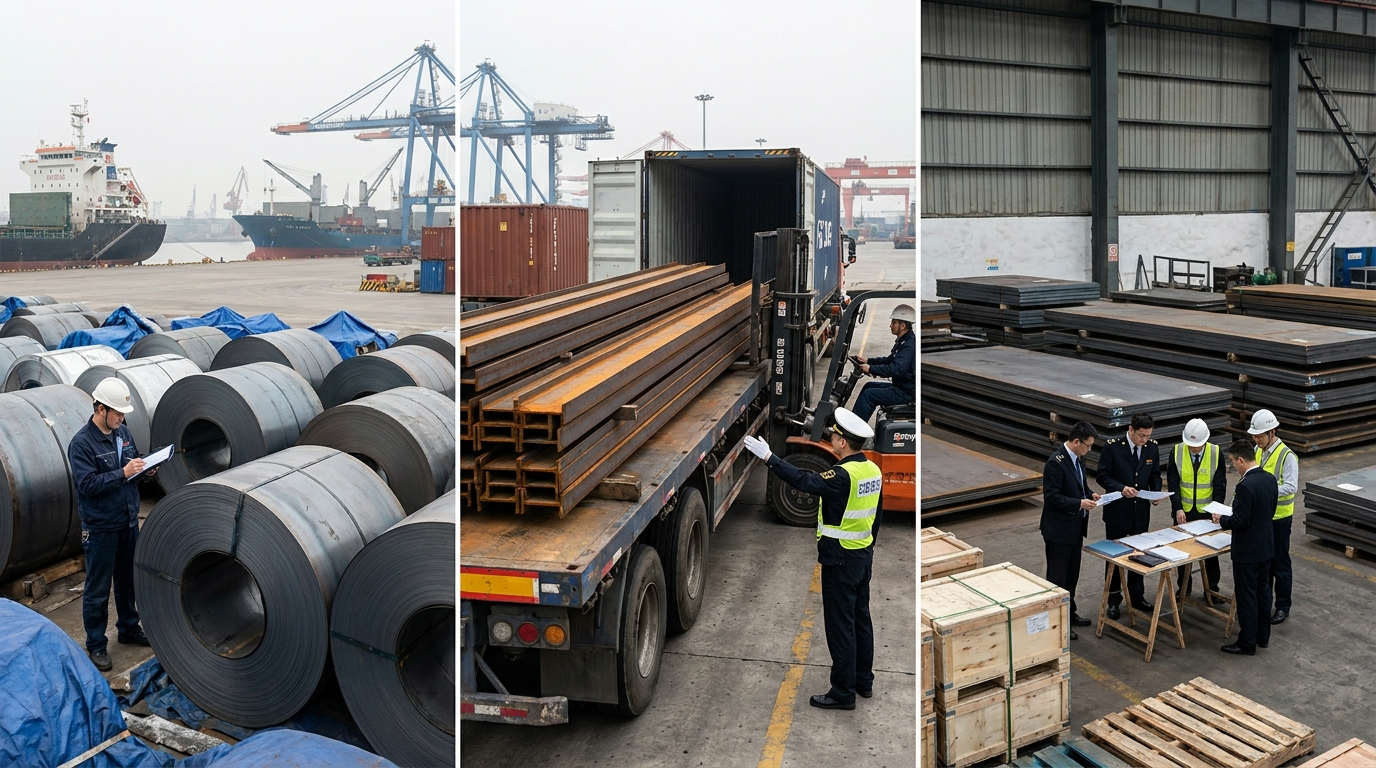
For steel sections, plate, coil, and pipe, buyers increasingly judge not only the factory offer but the execution package around it. Can the cargo be packed in a way that suits the destination and handling conditions? Are the documents aligned before loading? Is the route practical for the specific product? In June, these questions are not operational footnotes. They directly shape whether a transaction stays efficient from mill yard to discharge port.
对于型材、中厚板、卷材和钢管来说,买家现在评估的不只是工厂报价,还有围绕报价的执行包。包装方式是否适合目的地和装卸条件?单证是否在装船前就对齐?路线是否适合该产品?到了 6 月,这些问题已经不是操作附注,而是直接决定一笔生意能否从厂区到卸货港都保持高效。
3) Buyers who tighten the order earlier are the ones who keep the export advantage.
Chinese supply still offers clear value, especially when timing and specification are right. But the margin is increasingly captured by buyers who lock down details earlier: exact grade, tolerances, bundle logic, label requirements, and destination-facing documents. The June lesson is straightforward: export momentum helps, but shipment discipline is what turns momentum into a reliable delivered result.
中国供应仍然具备明确价值,特别是在时点和规格匹配时。但利润越来越属于那些更早锁定细节的买家:明确牌号、公差、打包逻辑、标签要求以及面向目的地的单证。6 月给出的经验很直接:出口动能能提供机会,但真正把机会变成交付结果的,是发运纪律。