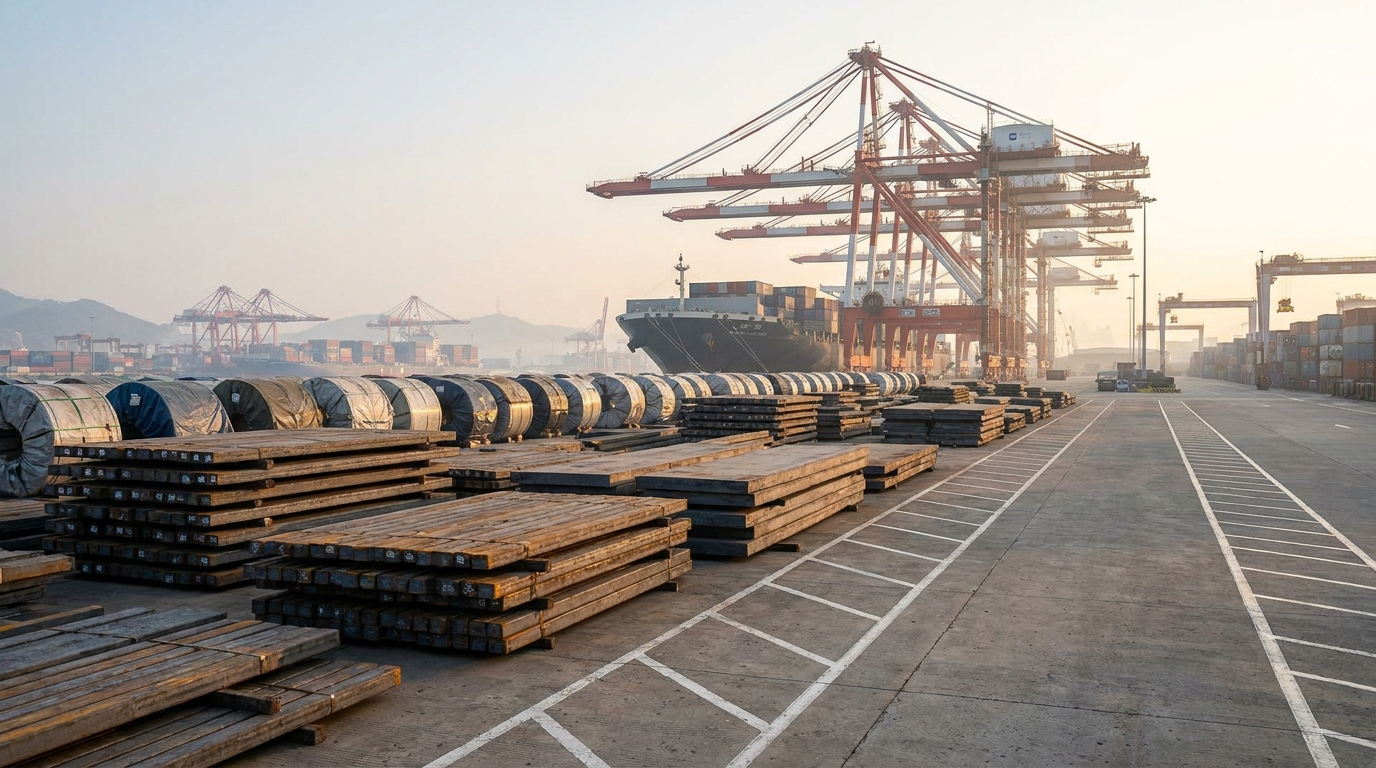
1) The clearest resilience is still in semi-finished cargo.
Existing market reporting built on Chinese customs data showed semi-finished steel exports reached 4.94 million metric tons in January through April 2026, up 47.77 percent year on year, with April alone reported at 1.64 million metric tons. That matters because it shows overseas demand is still willing to absorb Chinese-origin steel when the product sits closer to feedstock than to politically sensitive finished imports.
基于中国海关数据的既有市场报道显示,2026 年 1 至 4 月中国半成品钢出口达到 494 万吨,同比增长 47.77%,其中 4 月单月约为 164 万吨。这个信号的重要性在于,它说明当产品更接近“原料属性”而不是政治敏感度更高的成品进口时,海外市场依然愿意吸收中国来源钢材。
2) Finished flat steel is still carrying more friction.
The other side of the export mix looks less comfortable. Earlier 2026 reporting showed China's sheet and plate exports remained meaningfully below the same period last year, even when there was a small month-on-month recovery. That pattern fits a market where finished flat products face more direct anti-dumping sensitivity, narrower destination tolerance, and longer decision cycles around documents, end use, and customs treatment.
这套出口组合的另一面就没有那么轻松。2026 年早些时候的市场报道显示,中国板材出口即便在单月环比上略有修复,累计表现仍明显低于去年同期。这符合当前市场的一种现实:成品板材面临更直接的反倾销敏感性、更窄的目的地容忍度,以及围绕单证、最终用途和海关处理方式而拉长的决策周期。
3) Product channel now changes bargaining power.
This split matters even if you do not buy semis directly. When mills can keep volume moving through slab or billet lanes, they do not need to chase every finished-steel order with the same urgency. That can make finished offers look firmer than buyers expect from a generally cautious market. Product mix is therefore no longer just a production issue; it affects pricing behavior, lead-time confidence, and how aggressively a supplier protects margin.
即使你并不直接采购半成品,这种分化也会影响你的谈判位置。当钢厂仍能通过板坯或方坯等通道持续出货时,它们就不必以同样的急迫度去争抢每一票成品钢订单。这会让某些成品报价比买家预期得更“硬”。因此,产品组合不再只是生产问题,它已经影响到报价行为、交期信心,以及供应商守住利润的强弱程度。
4) Buyers win by separating lane risk before price talks.
The practical move is to separate cargoes before comparing offers. Ask whether the order belongs to a semi-finished lane, a commodity finished lane, or a more scrutiny-heavy flat-steel lane. Then match the decision to the right checklist: destination policy, certificate pack, inspection scope, shipment window, and realistic route alternatives. The cleaner the lane definition, the less likely a cheap quote turns expensive later.
更实际的做法,是在比价之前先把货物按通道分开。先判断订单属于半成品通道、普通成品通道,还是审查更重的板材通道;再对应不同清单去核对:目的地政策、证书包、检验范围、发运窗口以及现实可行的替代航线。通道定义越清晰,低价报价后续变贵的概率就越低。