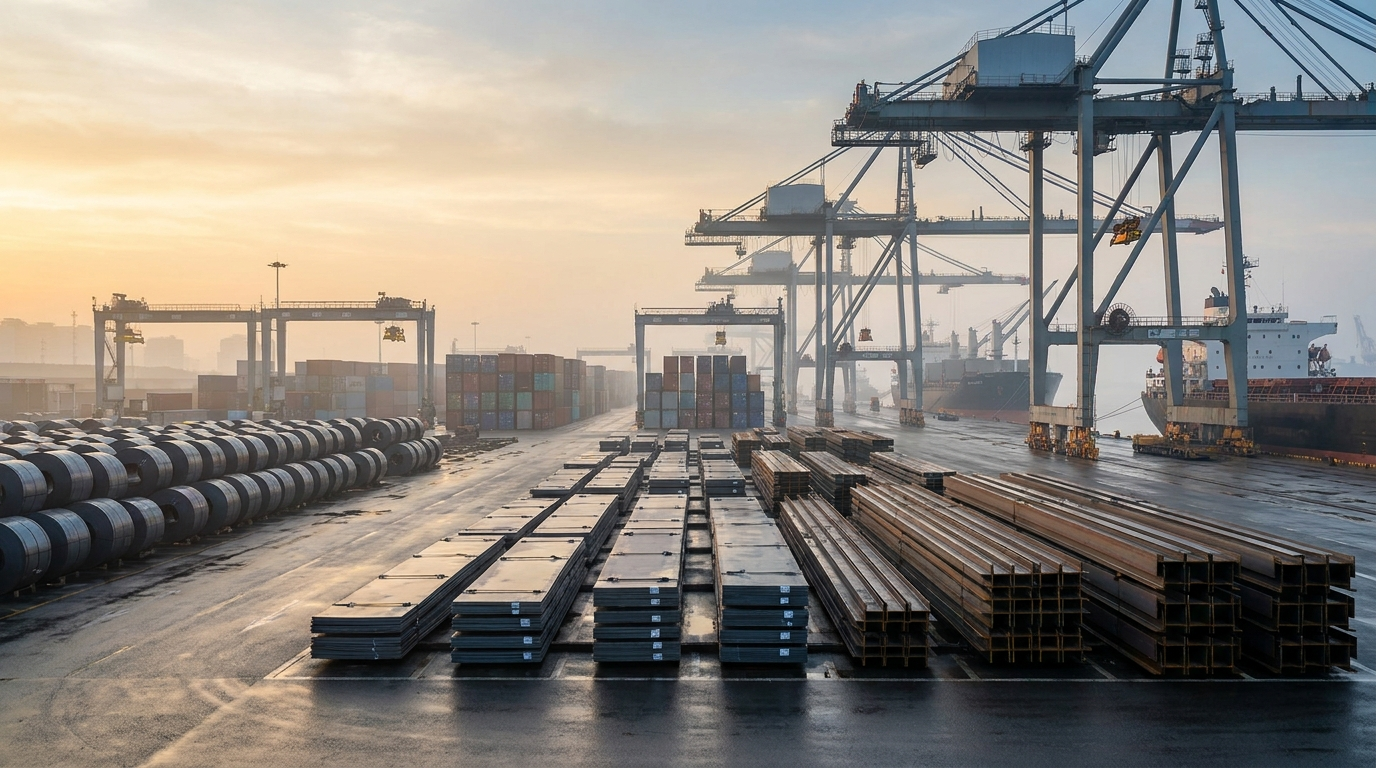
1) The export backdrop is still large enough to matter.
OECD's Steel Outlook 2026 gives the clearest scale reset. Even though world steel exports fell in 2025, the report says Chinese exports still rose 13.8% to a record 131.2 million tonnes, taking China's share of world steel exports to 41%. For buyers, that means China remains a usable source base. The market is not dealing with disappearing availability. It is dealing with a much more selective routing environment around that availability.
OECD《2026 钢铁展望》首先重新定义了“规模”这个前提。报告指出,尽管 2025 年全球钢材出口整体下降,中国出口却仍增长 13.8%,达到创纪录的 1.312 亿吨,占全球钢材出口比重升至 41%。这说明中国依旧是可用的供应来源。市场面对的不是货源消失,而是在这一巨大供给基础上,哪些路线与产品还能更顺畅地落地执行。
2) Product-flow data says cargo is still moving, but not every mix is equally easy.
China's May major-exports tables still list meaningful outbound value and quantity in products of steel or iron, which is the practical reminder that cargo is still clearing and shipping. But that does not mean every basket of material is equally defensible. The more generic the order becomes, the easier it is for buyers to run into price pressure, compliance doubts, or destination hesitation. Product mix is increasingly part of the execution decision, not just the sales pitch.
中国海关 5 月主要出口商品表中,钢铁制品仍对应着可观的出口数量和金额,这个信号很实际: 货物依然在装运、清关和离港。但这并不代表任何一揽子产品都同样容易成交。订单越泛化,就越容易碰到价格竞争、合规疑虑或目的地迟疑。产品组合正在从“销售话术”变成“执行决策”的核心部分。
3) Trade friction is forcing buyers to narrow the lane earlier.
The policy angle is also getting harder to ignore. Tavily's OECD and Europe-focused results were consistent on one point: rising trade pressure around Chinese industrial exports is narrowing the comfortable lanes. That does not eliminate demand for Chinese steel, but it raises the penalty for vague destination planning. Buyers now protect timing and margin by deciding earlier whether the cargo fits a market that wants commodity tonnage, or one that needs cleaner specification logic and better paperwork support.
政策层面的压力也越来越难忽视。Tavily 返回的 OECD 与欧洲贸易相关结果,在一个方向上是高度一致的: 针对中国工业品出口的摩擦正在上升,可轻松成交的通道正在减少。这并不意味着中国钢材没有需求,而是意味着模糊的目的地规划成本越来越高。买家若想守住交期和利润,就需要更早判断货物是适合走“普通吨位市场”,还是必须走“规格更清晰、单证更完整”的市场。
4) The takeaway is not less buying, but cleaner buying.
For YQ Steel's export-facing customers, the practical implication is straightforward. China can still supply volume, and the market still needs finished steel, but the safest orders are becoming the ones with clearer product logic: more defined end use, tighter specification control, cleaner documentation, and a destination choice that matches the cargo. In this phase, execution quality is part of product value.
对于面向出口的 YQ Steel 客户来说,结论并不是“减少采购”,而是“更干净地采购”。中国依然可以提供规模化供应,海外市场也依然需要成品钢材,但更稳妥的订单,正在转向那些产品逻辑更清晰的组合: 最终用途更明确、规格控制更紧、单证准备更完整、目的地选择与货物属性更匹配。在这一阶段,执行质量已经成为产品价值的一部分。