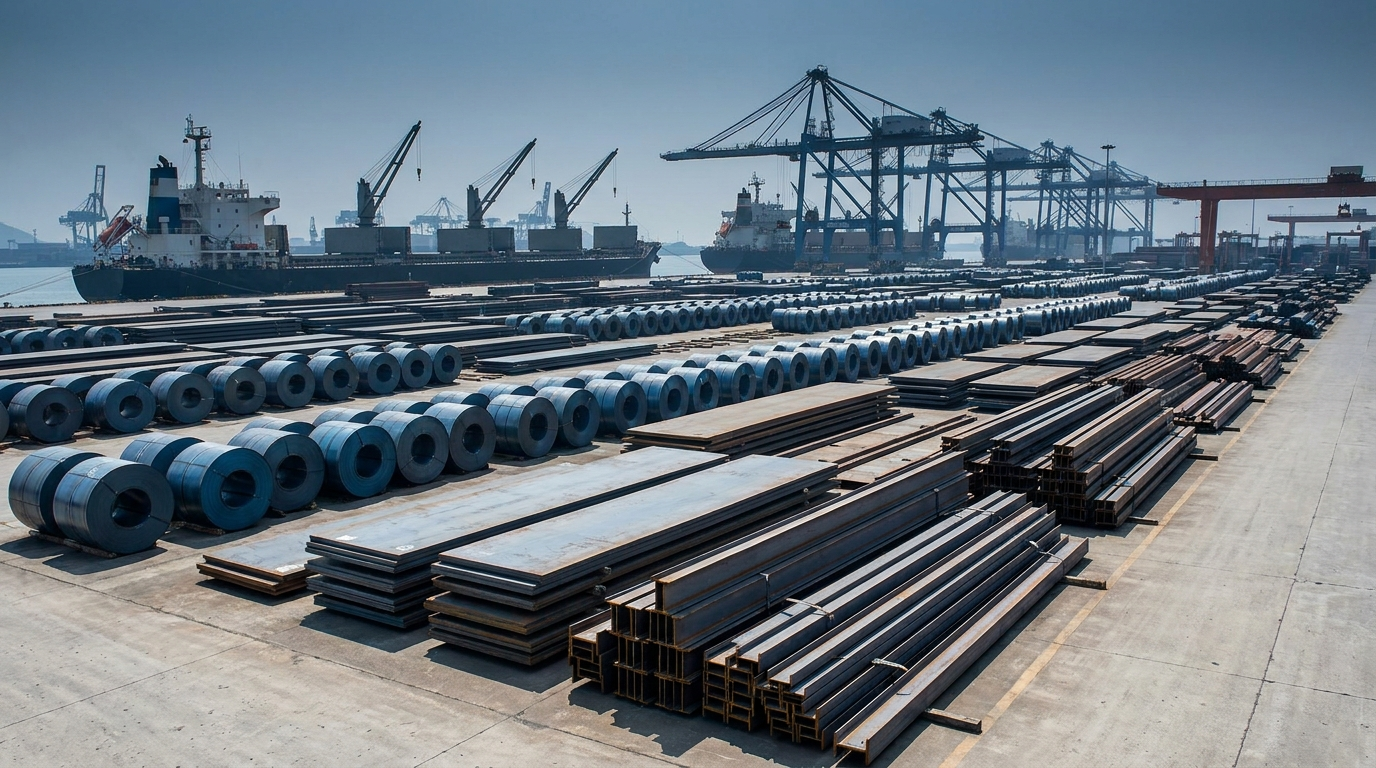
1) Scale is still there, which is why lane selection matters so much.
OECD's Steel Outlook 2026 leaves no doubt about the size of the export base. Chinese steel exports in 2025 reached a record 131.2 million tonnes, or 41% of world steel exports. That means China remains a serious sourcing option. But it also means destination markets, banks, and customs systems are paying closer attention. Once the market becomes that large, the easy assumption that every product can move under the same playbook stops working.
OECD《2026 钢铁展望》已经把出口底盘的规模说得很清楚:中国 2025 年钢材出口达到创纪录的 1.312 亿吨,占全球钢材出口的 41%。这说明中国依旧是一个重要采购来源。但也正因为规模大,目的地市场、银行和海关系统都在更密切地盯着它。市场一旦放大到这个程度,“所有产品都能用同一套打法走出去”的假设就不再成立。
2) One speed belongs to cleaner lanes that still keep cargo moving.
China's May customs flow is the reminder that steel-related products are still shipping in visible quantity and value. That is the faster lane: orders with clearer specification packs, lower political sensitivity, and a more defensible end-use story. In those cases, buyers can still turn booking access into real shipment progress because the route logic and document logic reinforce each other instead of fighting each other.
中国海关 5 月的流量数据提醒我们,钢铁相关产品依然在以可见的数量和金额持续外流。这对应着“较快的一档通道”:规格包更清晰、政治敏感度更低、最终用途故事更容易自洽的订单。对这类货物来说,买家依然可以把订舱机会真正转化为发运进度,因为航线逻辑和单证逻辑是互相加强的,而不是互相拖累。
3) The second speed is slower because scrutiny is now part of the freight path.
Europe-focused trade coverage keeps reinforcing the other side of the market. Chinese industrial inflows are being screened more closely, and that forces a slower rhythm on the lanes that look broader, more generic, or more politically exposed. Those orders can still be possible, but they need cleaner certificates, earlier destination confirmation, more realistic back-up routing, and more patience around execution. In other words, the slower lane is not dead. It is just much less forgiving.
围绕欧洲方向的贸易报道则不断强化另一面的现实:中国工业品流入正在被更严密地筛查,这会让那些更泛化、更宽口径、或政治暴露更高的通道自然变慢。这些订单依然可能做成,但它们需要更完整的证书、更早确认目的地、更现实的备选航线,以及对执行节奏更高的耐心。换句话说,慢的一档通道并没有死掉,只是容错率已经大幅下降。
4) Buyers now win by designing around the right speed instead of demanding one price logic for all cargo.
The practical strategy is to separate orders before negotiating. Ask whether the cargo belongs in a cleaner, faster lane or in a slower, scrutiny-heavy lane. Then price, quote validity, booking sequence, and documentation effort accordingly. When buyers do that, they stop treating steel exports as one blended market and start treating them as two different execution environments. That shift is what turns a generic sourcing plan into a workable export strategy.
更实用的策略,是在谈价格之前先把订单分档。先判断货物属于更干净、更快的一档,还是属于更慢、审查更重的一档;然后据此安排报价逻辑、有效期、订舱顺序和单证投入。买家一旦这样操作,就不再把钢材出口市场看成一个混合池子,而是把它看成两种不同的执行环境。这种转换,正是普通采购计划升级成可执行出口策略的关键。