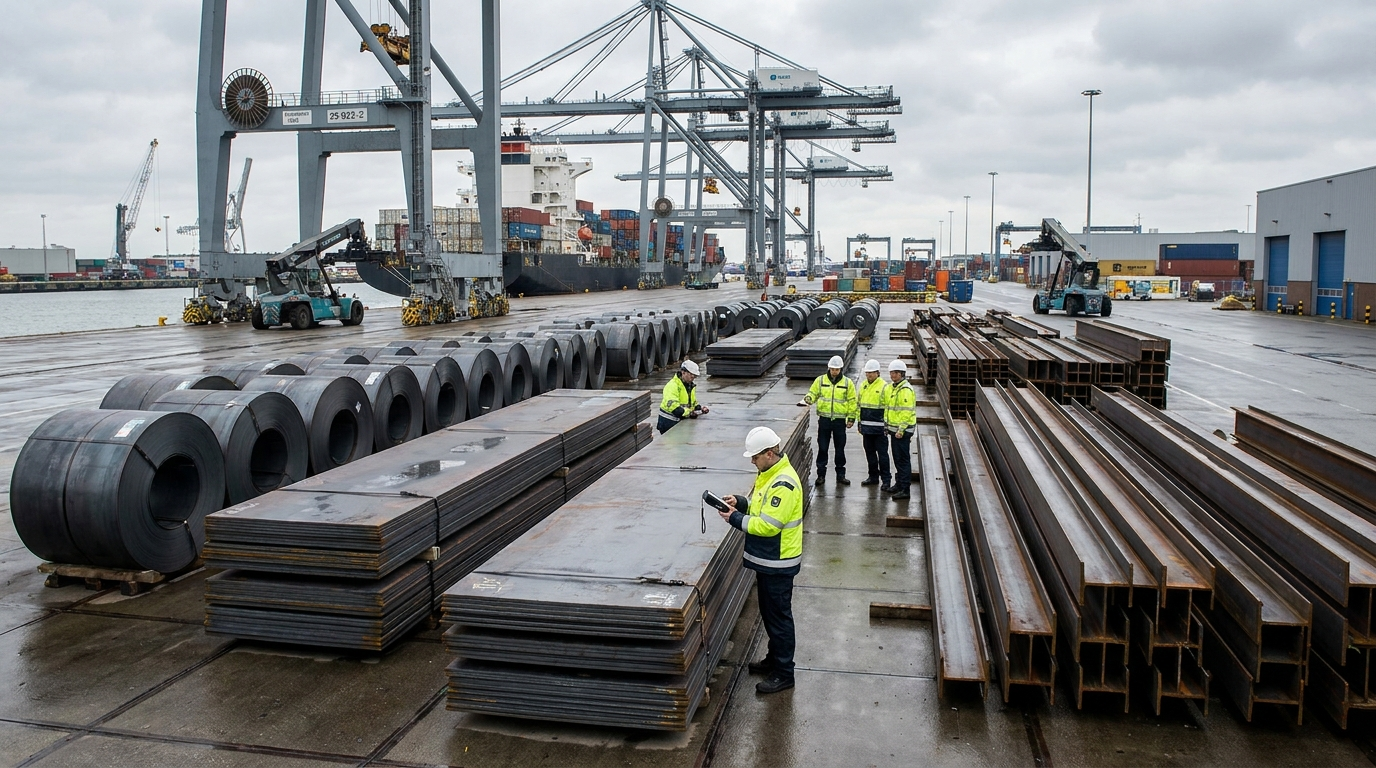
1) The EU's July framework is shrinking the easy lane before cargo even reaches the quay.
The European Commission's steel regulation work shows that from July 1, 2026 the new system will set tariff-free quotas at 18.3 million tonnes, apply a 50% duty to out-of-quota imports, and bring in a melt-and-pour regime to improve transparency. That combination matters because it reduces the room for loosely documented cargo. A shipment can still be competitively priced on paper and still lose its edge if the proof trail is weak or late.
欧盟委员会关于新钢铁机制的公开说明显示,自 2026 年 7 月 1 日起,新体系将把免税配额设为 1830 万吨,对超配额进口征收 50% 关税,并引入熔炼与浇注追溯要求以提升透明度。几项变化叠加的结果,是原本依靠模糊单证也能推进的货,更容易在执行环节失速。表面报价有竞争力,并不代表最终能顺利落地。
2) Traceability is moving from a compliance footnote to a buyer-screening filter.
The Commission has already opened a consultation on what evidence importers and exporters should provide for country of melt and pour. That is the important signal. Europe is not waiting until the last minute to ask for better proof. It is building the documentation standard in advance. For buyers, this means source selection now has to include a question that used to come later: can this supplier produce a clean, consistent origin trail that matches the product and route?
欧盟已经就“熔炼与浇注原产地”应提交何种证明材料启动了定向征询,这本身就是一个很强的信号。欧洲不是临近执行再临时加码,而是在提前建立证明标准。对买家来说,供应商筛选的关键问题也因此前移了:这家供应商能不能拿出与产品、路径、原产逻辑一致且经得起复核的追溯文件。
3) China-origin cargo can still compete, but the winning offers will be the ones with cleaner paperwork architecture.
China Customs' May 2026 export table still shows active outward steel-related flow, which means supply has not disappeared. What is changing is the definition of a usable offer. In a tighter EU environment, the better order is no longer simply the cargo with the lowest workable FOB number. It is the cargo that combines product fit, quota timing, and documentation depth strongly enough that the importer does not have to reconstruct the shipment story at the end.
中国海关 2026 年 5 月出口统计仍显示钢铁相关货物流动活跃,这说明供给并没有消失。真正变化的是“什么样的报价才算可用”。在更紧的欧盟环境下,优质订单不再只是 FOB 看起来便宜,而是要把产品匹配、配额时点和单证深度一起做扎实,避免进口商在最后阶段还要反复补齐整票货的来源逻辑。
Takeaway
For Europe-facing steel business, July 2026 is turning market access into a traceability discipline. Buyers who ask for melt-and-pour evidence early will filter risk sooner. Sellers who prepare that chain early will keep more of the real order flow.
对面向欧洲的钢材业务来说,2026 年 7 月开始,市场准入会越来越像一场追溯能力测试。越早要求熔炼与浇注证明的买家,越能提前筛掉执行风险;越早把追溯链条准备好的卖家,越有机会拿到真正能成交和落地的订单。