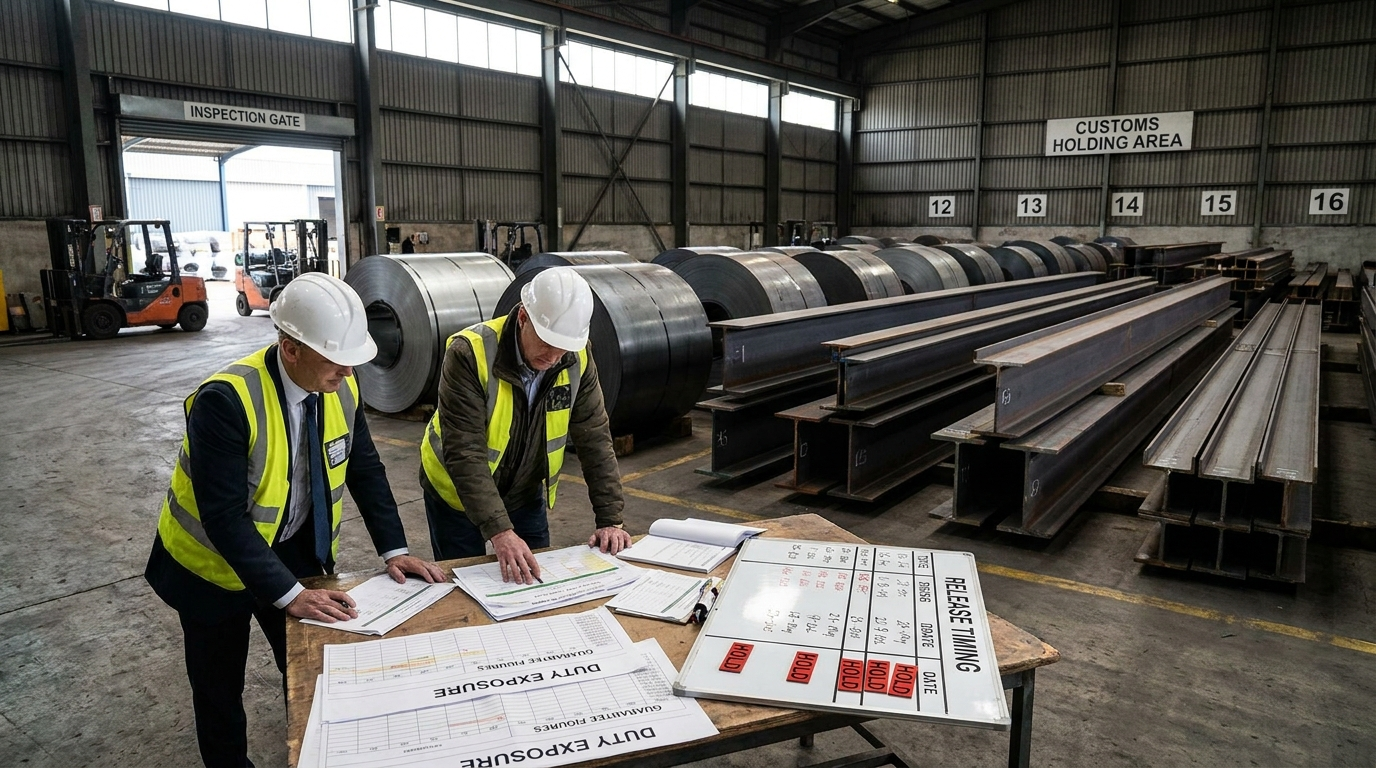
1) Critical quota changes the conversation from allocation hope to financial exposure.
The UK implementation guidance says quota access is granted on a first come, first served basis and becomes critical once 90% of the quarterly volume has been allocated. That sounds technical until a live shipment sits behind it. At that point, the buyer is no longer just competing for a tariff-free slot. The buyer is stepping into a zone where the claim may still fail and the importer may need to prepare for a much heavier cash position while waiting for the outcome.
英国实施指引明确写到:配额采用先到先得,且当季度用量达到 90% 时会进入 critical 状态。这个表述看上去像技术条款,但一旦落到正在发运的货物上,它的含义就完全不同了。此时买家面对的不只是“还能不能拿到免税配额”,而是“如果申领失败,进口方是否已经准备好承受更重的现金压力”。
2) Guarantee exposure is now part of the landed-cost discussion.
The same guidance warns that when quota is critical, importers may need to provide security for the full amount of duty because the claim can be refused. Under the new measure, that means exposure linked to a 50% out-of-quota duty can suddenly move into the file. Buyers who ignore this until the shipment is near release are not managing cost; they are postponing cost visibility. Better teams are now asking earlier whether the importer has the balance-sheet tolerance and guarantee pathway to carry a critical-file scenario.
同一份官方说明还提醒:当配额处于 critical 状态时,进口方可能需要就全部税额提供担保,因为申领仍有可能被拒绝。在新规则下,这意味着与 50% 超配额税相关的风险,可能突然被拉进这单货的财务结构里。若买家等到货快放行了才考虑这件事,本质上不是在控制成本,而是在推迟成本暴露。更成熟的团队现在会更早确认:进口方的资产负担能力够不够,担保路径是否可行。
3) The strongest buyers are treating quota timing as a pre-sale question.
In earlier market conditions, quota administration could often sit in the background while negotiation focused on price, delivery, and specification. That is no longer enough. In today's UK-bound steel trade, the ability to land under quota may depend on how early the file is assembled, how quickly the declaration route is prepared, and how honestly the team judges the time remaining before the quarterly line tightens. This is why more disciplined buyers now bring quota timing into the deal structure before they finalize supplier choice.
在过去的市场条件下,配额管理往往可以放在后台,谈判重点放在价格、交期和规格上。但现在这样已经不够了。对于当前的 UK-bound 钢材交易来说,能不能在配额内落地,往往取决于文件组装得有多早、申报路径准备得有多快、以及团队对“距离季度额度收紧还剩多少时间”的判断有多诚实。这也是为什么更有纪律的买家,现在会在敲定供应商之前,就把配额时点纳入交易结构。
Takeaway
Under the UK's July 2026 steel regime, critical quota is no longer a customs-side footnote. It is a real buyer cash-flow test. Teams that surface guarantee exposure, importer readiness, and timing risk early are now protecting margin more effectively than teams still treating quota as background administration.
在英国 2026 年 7 月钢铁新规下,critical quota 已经不再是海关层面的脚注,而是实打实的买家现金流测试。谁能更早把担保压力、进口方准备度和时间风险摆到台面上,谁就更有可能把利润守住。