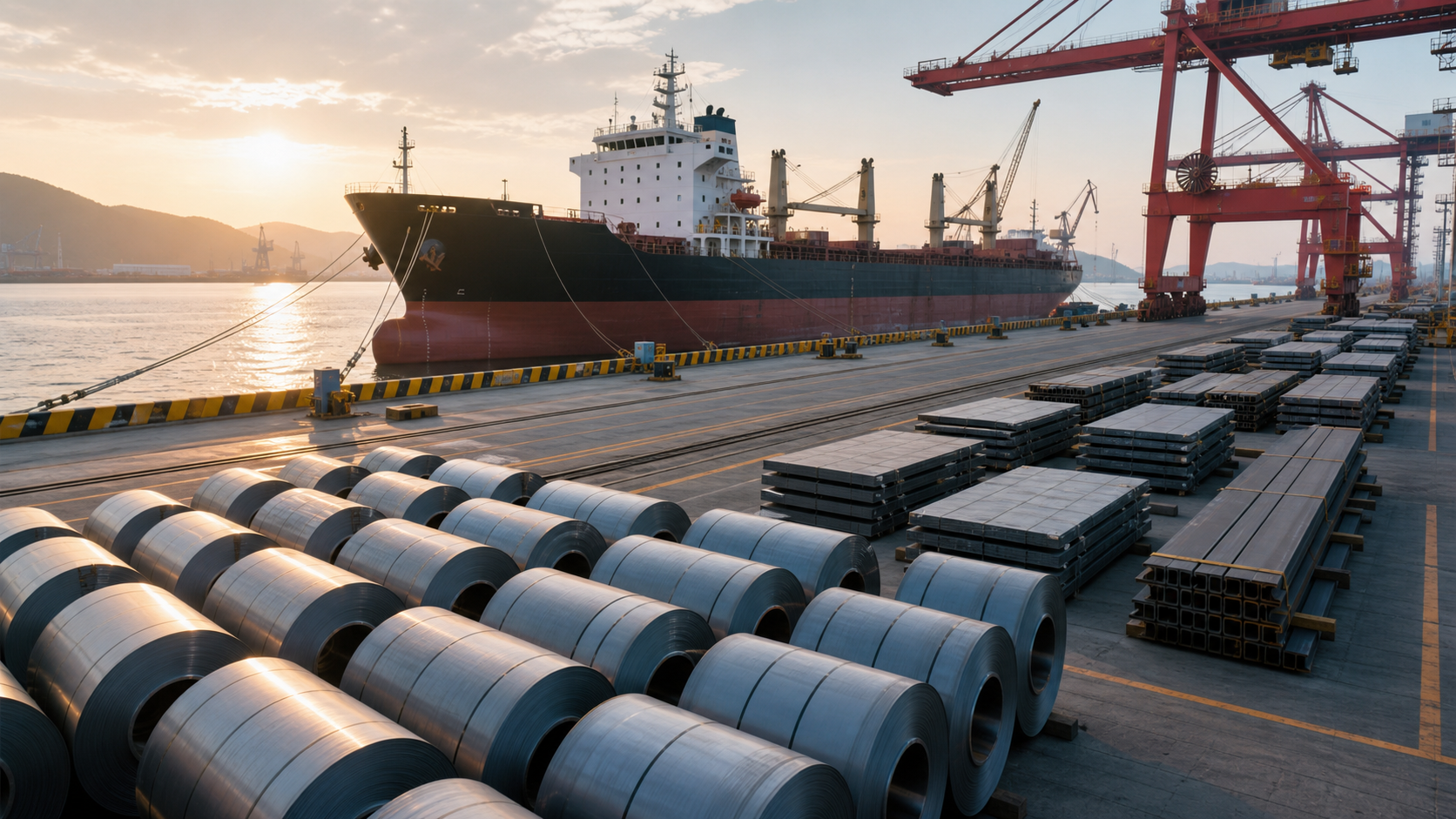
1) Weaker Chinese demand is making export channels more strategic.
Bloomberg reported on August 17 that Chinese steel production fell sharply as mills adjusted to much weaker demand, underscoring how soft downstream conditions are reshaping commercial priorities. When domestic absorption loses momentum, export business matters more, but mills also become more selective about which offshore orders are worth their capacity.
That favors finished-steel cargo tied to manufacturing or project schedules over loose volume chasing. Buyers able to show credible end use, delivery timing, and clearer product fit become easier counterparties for mills trying to protect utilization without inviting margin or compliance trouble.
2) Trade friction is raising the bar for where Chinese steel can move cleanly.
Reuters noted this week that Indian steelmakers are leaning more heavily on their domestic market as Europe and Britain tighten imports, while low-priced Chinese material continues to shape competition. For Chinese exporters, that is another sign that offshore demand may stay available, but the safe destination mix is narrowing.
In practical terms, stronger buyers are the ones who can still move finished steel through markets with fewer policy surprises, cleaner import handling, and faster customs execution. That pushes attention toward orders with better documentation discipline rather than trades that depend only on short-term price advantage.
3) Product mix is shifting toward business that can survive the full export process.
A BigMint market update highlighted that Chinese steel exports had been running at very elevated levels and were expected to taper only gradually as policy support tries to stabilize local demand. That combination does not close the export window, but it does encourage mills to screen harder for orders that can move from booking to loading without repeated resets.
Flat products, plate, and other shipment-ready finished steel fit that requirement better than speculative cargo with uncertain downstream pull. The result is not just an export volume story; it is a product-mix story in which execution quality and end-use visibility increasingly sit beside price in the buying decision.
4) What buyers should do while this window stays open.
Buyers still have room to source from China, but the advantage now belongs to prepared inquiries. Grade, size, destination, consignee logic, and shipping timetable should be aligned before final negotiation, because mills are likely to favor the order that looks most likely to clear both trade scrutiny and port execution without delay.
YQ Steel's reading for August 18 is simple: China is not losing its export role, but the mix is tilting toward safer finished orders. The strongest buying position is no longer just a low target price; it is a complete order case that gives the supplier confidence all the way through shipment.