1) The export mix is no longer moving as one block.
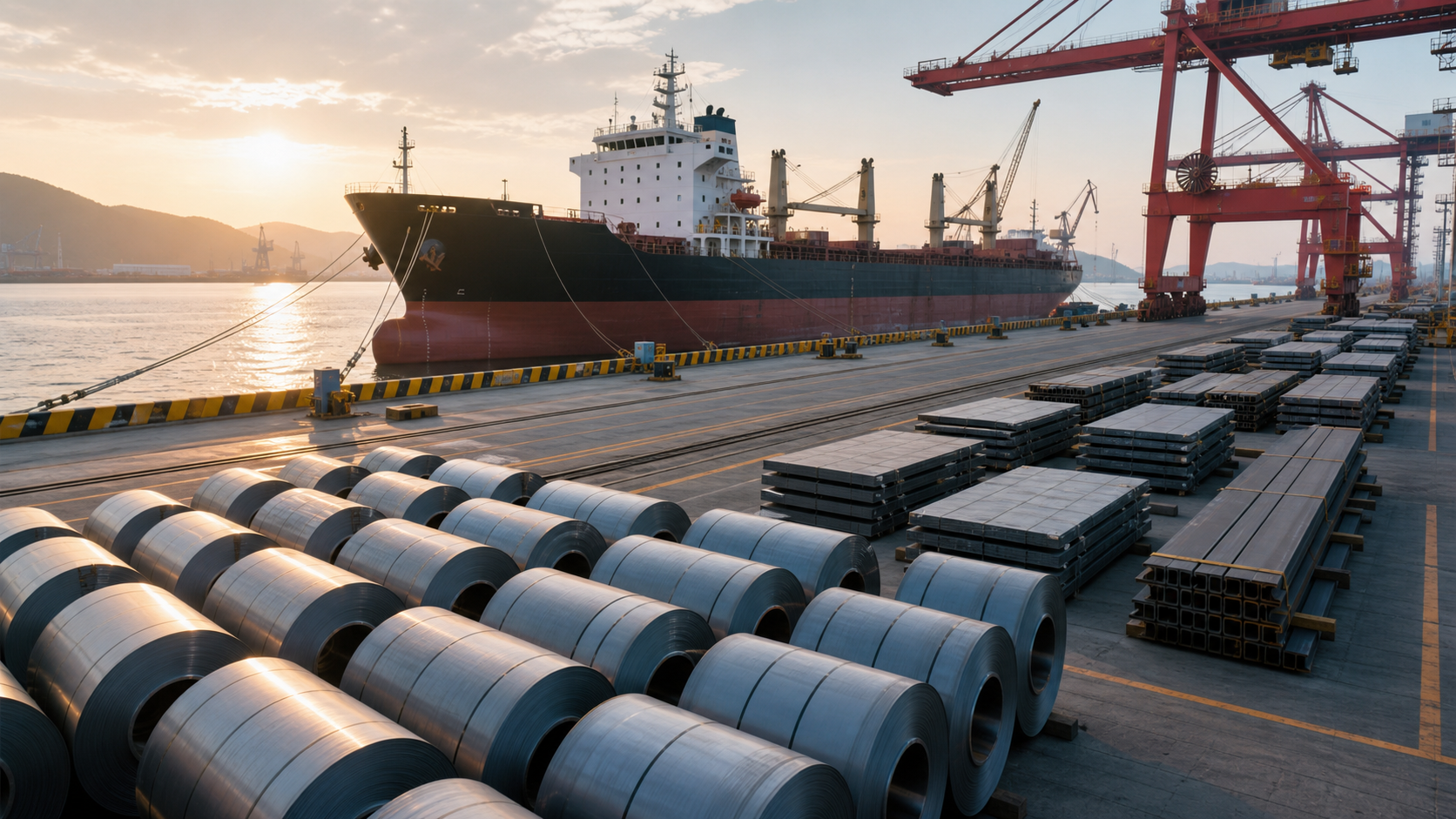
Fresh January-July trade data highlighted by SteelOrbis shows China's steel bar exports reached 11.93 million mt, up 12.3 percent year on year. Over the same period, China's sheet and plate exports fell 9.9 percent to 38.26 million mt. That is not a uniform slowdown. It is a split between product families that are serving different demand channels.
For exporters, that matters because buyers often talk about "China steel" as if all categories are responding to the same signals. They are not. Long products are still finding room where infrastructure work, fabrication, and project-linked restocking remain active, while flatter products are seeing more hesitation from customers exposed to slower manufacturing and more competitive regional supply.
2) Demand quality is becoming the real filter behind those numbers.
Reuters' August 18 market commentary on China's steel sector described a domestic picture with divergent demand drivers: property weakness is still weighing on overall consumption, but infrastructure and selected industrial segments are holding up better. That split helps explain why some export orders continue to convert while others stall in negotiation.
A separate GMK Center report this week pointed to Chinese steel-structure demand shifting toward green-energy and infrastructure projects, reinforcing the idea that buyers tied to visible project pipelines still look more credible than buyers shopping for optional inventory. In practical terms, mills and traders can justify shipment slots more easily when the order is connected to an active construction, energy, or fabrication timeline.
3) What this means for finished-steel buying from China now.
When export tonnage is splitting by product family, procurement discipline has to become more product-specific too. Rebar, wire rod, sections, and project-ready longs can still move with confidence when the end use is clear. Flat products, by contrast, may require sharper justification on specification, downstream use, and timing before suppliers treat the inquiry as execution-ready.
This is also where trade friction quietly returns to the conversation. In a market where the easier-tonnage story is fading, suppliers become more selective about which finished-steel orders are worth carrying through compliance checks, booking risk, and destination scrutiny. The cargo with the best chance is not the loudest inquiry. It is the one with the cleanest demand logic.
4) YQ Steel's working view for August 21.
YQ Steel reads the current market as a demand-bifurcation phase rather than a simple export retreat. China's mills are still selling abroad, but the winning order profile is narrowing toward finished-steel cargo linked to funded projects, real fabrication schedules, and buyers who can explain exactly how the material will be used.
For importers, the takeaway is straightforward: present the order as a real operating requirement, not a speculative option. In today's market, that difference can shape whether a Chinese supplier offers ordinary follow-up, faster confirmation, or a far more committed path to shipment.