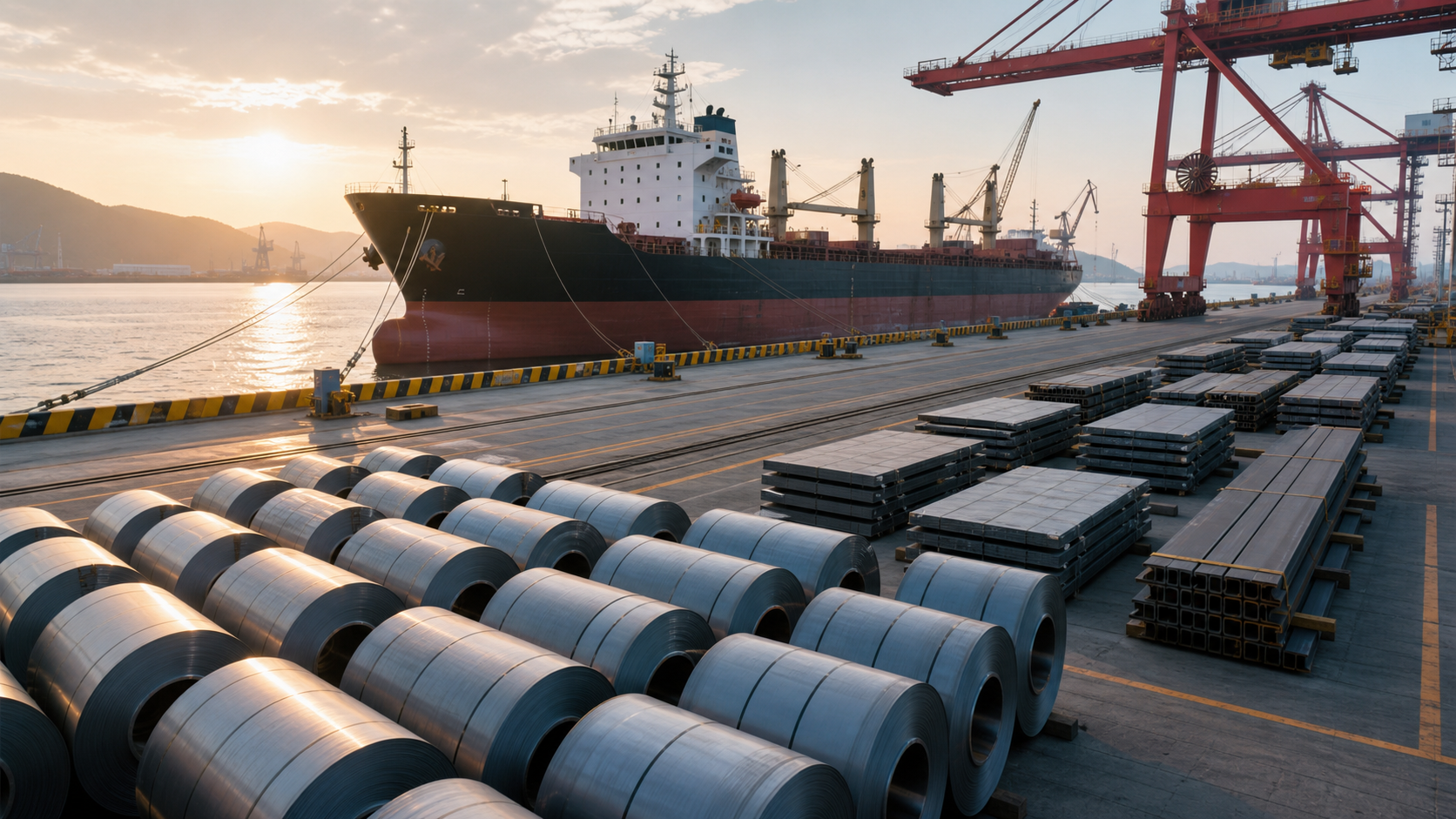
1) China's export mix is diverging by product, not moving in one line.
SteelOrbis data for January through July shows China's steel bar exports reaching 11.93 million mt, up 12.3 percent year on year. That matters because it suggests parts of the long-product basket are still finding workable overseas demand even after months of pressure around pricing and competition.
In the same reporting cycle, SteelOrbis said China's sheet and plate exports fell 9.9 percent year on year to 38.26 million mt. For buyers, that is a useful reminder that mills are not just asking whether export volume is possible. They are also reading which product families still have a cleaner path to end use, financing, and acceptance in destination markets.
2) Port and shipping execution are part of the product screen now.
C.H. Robinson's August ocean update pointed to heavier congestion and schedule disruption around major Asian transshipment hubs including Shanghai and Singapore. Even if finished steel is not moving through every congested node in the same way, the message is still practical for exporters: a sale only becomes attractive when routing, handoff timing, and vessel reliability feel understandable enough to protect the cargo plan.
That is why shipment readiness is increasingly tied to product choice. Cargo that is easier to pack, document, and explain to downstream buyers will often look safer than tonnage that depends on vague timing or optional restocking. In a week where export product performance is already uneven, the port side becomes an additional filter rather than a separate issue.
3) The best demand signals are still tied to visible finished-steel use.
Reuters' August market commentary on China described steel output easing against divergent demand drivers, with weakness still linked to construction while stronger pockets remain closer to manufacturing activity. That backdrop fits the current export split: the most bankable inquiries are less likely to be broad price fishing and more likely to be connected to fabrication schedules, machinery orders, or identifiable project consumption.
Buyers do not need a perfect market to win attention from mills or traders. They need a clear specification, a believable consignee story, and a shipment plan that can survive port friction without turning into a rolling delay. When those pieces are visible, even a cautious seller can justify moving faster on quotations and mill reservations.
4) YQ Steel's working view for August 23.
YQ Steel reads today's setup as a port-and-product screening phase for Chinese finished-steel exports. Long products with credible downstream use may continue to travel better than softer flat-product flows, but both sides of the market are now being judged more tightly on execution discipline.
For importers, the near-term advantage is to present fewer, better-formed orders. The inquiry that links product category, end use, shipping window, and paperwork readiness in one message is still the one most likely to rise above a crowded export market.