1) The product mix is splitting before the export story is settled.
BigMint's latest January-July reading put China's finished steel exports at 64.99 million tonnes, down 4.4 percent year on year, but also noted that the decline had narrowed from the first-half pace. That leaves the market active enough for selective buying, while still forcing exporters to prove why a specific product and destination deserve capacity.
SteelOrbis showed the detail behind that split: steel bar exports reached 11.93 million mt in January-July, up 12.3 percent year on year, while sheet and plate exports fell 9.9 percent to 38.26 million mt. For buyers, the message is that long products and flat products are being judged differently, so a quote request has to explain the end use rather than simply ask for the cheapest available tonnage.
2) Trade friction is turning paperwork into a buying filter.
Recent tariff and trade-compliance updates show that steel-linked import files are still being watched closely across destination markets. Even when a measure is not aimed at one cargo lot, buyers and sellers know that product scope, origin logic, mill evidence, and customer declarations can change the landed-cost risk very quickly.
This is why finished-steel orders with clear specifications are more competitive than broad inquiries. A buyer that can define grade, shape, coating or surface needs, destination, consignee, and project use gives the exporter a cleaner path through compliance review. A vague order may still attract a price, but it is less likely to receive the best production slot or shipment focus.
3) Port execution is part of the commercial test.
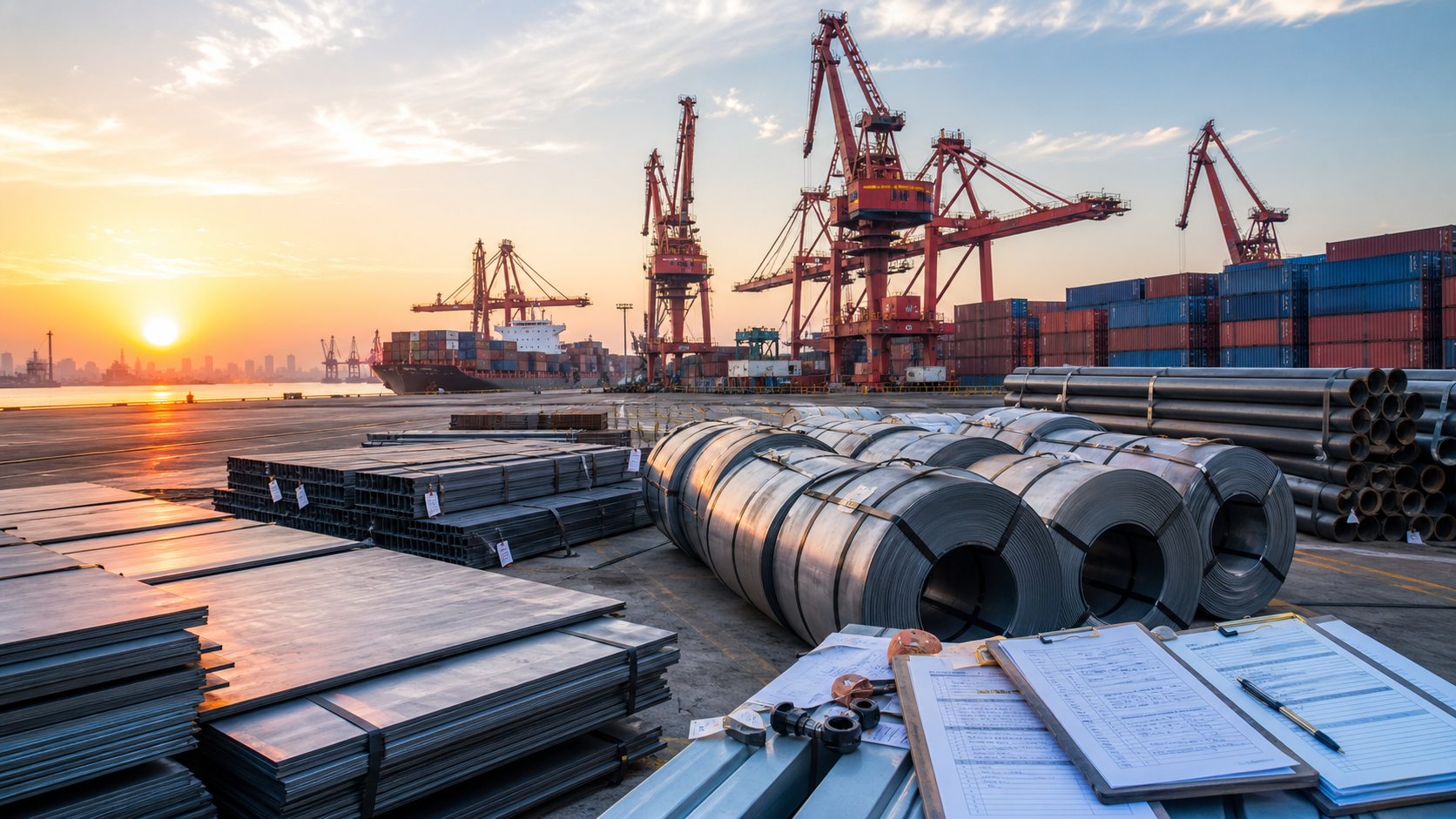
Port and shipping execution remains a practical constraint for China export steel. Asian hub congestion and schedule disruption have been a recurring theme in August freight updates, and steel cargo adds its own handling realities around bundles, coils, plates, pipe, loading windows, and document release.
That makes shipment readiness a product-mix issue, not just a logistics issue. Orders that can be packed, marked, inspected, and released with fewer late changes are easier to support when port capacity or sailing reliability tightens. For mills and traders, a clean export file reduces the chance that a nominally profitable order becomes a rolling delay.
4) YQ Steel's working view for August 24.
YQ Steel reads today's market as a selective finished-steel export window. China's export flow is still large enough to matter, but the better buying opportunities are concentrated in orders that link product family, downstream demand, trade-file readiness, and shipment execution in one coherent plan.
For importers, the near-term edge is discipline. Bring a tighter specification, a real project or resale channel, a realistic loading window, and complete paperwork expectations at the start. In the current market, that kind of order can move faster than a larger inquiry that leaves product mix, destination risk, and port execution unresolved.