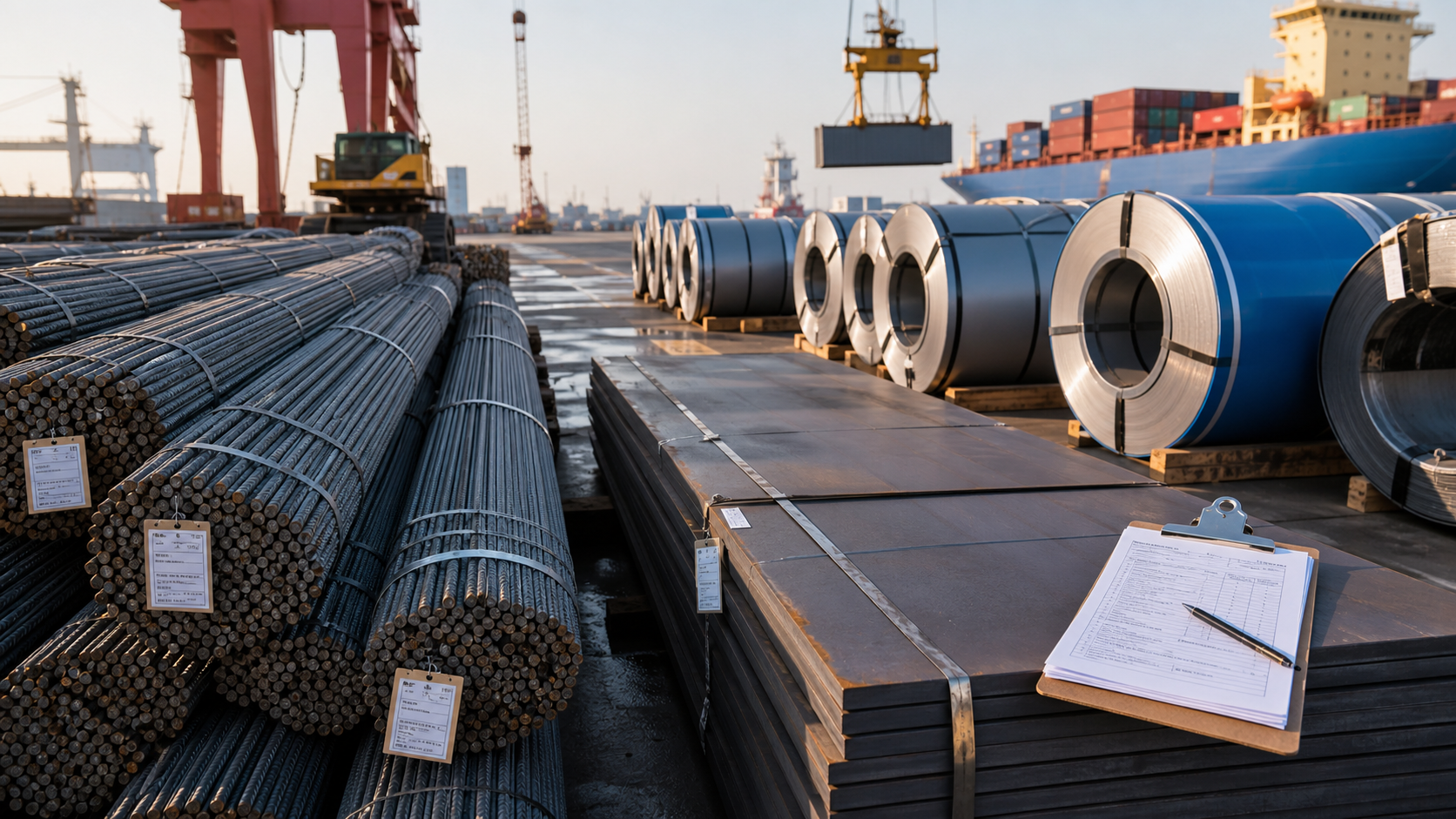
1) The export mix is no longer moving evenly.
SteelOrbis reported that China's steel bar exports reached 11.93 million mt in January-July 2026, up 12.3 percent year on year. In the same data cycle, China's steel sheet and plate exports fell 9.9 percent to 38.26 million mt, showing that the headline export flow is being pulled in different directions by product family.
For buyers, that split matters more than a single tonnage number. Bar, beam, channel, angle, coil, plate, and coated products are each being priced against different destination demand, inventory comfort, and production-slot pressure. A serious inquiry now needs to explain the end use and tolerance requirements, not just ask for the cheapest available steel.
2) Trade friction is raising the value of clean files.
Recent tariff-tracker updates continue to show steel-linked import rules shifting across destination markets, while mainstream trade coverage has kept tariff disputes in focus. Even when a new measure is not written for one exact shipment, the risk changes how buyers and exporters think about product scope, origin evidence, mill documents, and landed-cost exposure.
That makes documentation a commercial filter. Orders with clear grade, shape, coating, destination, consignee, and project-use information are easier to review before production and shipment. Vague inquiries may still receive a number, but they carry more uncertainty when customs questions, customer declarations, or quota-style checks appear late in the process.
3) Shipping readiness is part of product selection.
Port and shipping execution remains a practical screen for finished steel. Bundled bars, plates, pipe, and coils need different packing, lifting, marking, inspection, and release steps, and those details can affect whether an export order is easy to load or becomes a late-change problem at the yard or port.
This is why a product-mix decision cannot be separated from execution. A smaller, well-specified cargo with realistic loading dates and complete paperwork can be easier to prioritize than a larger order that keeps changing thickness, bundle weight, marking, destination, or document instructions.
4) YQ Steel's working view for August 25.
YQ Steel reads today's market as a selective export window for finished steel. Long-product demand signals remain useful, flat-product demand needs more careful checking, and trade-friction risk makes clean documents an important part of the quote, not an afterthought.
Importers can improve their position by bringing a complete buying file at the start: product family, grade, size range, coating or surface needs, packing method, destination, loading window, and the commercial reason behind the order. In this market, that kind of disciplined inquiry gives exporters a better chance to align mill capacity, compliance review, and shipment execution.