1) Product mix is becoming the real headline.
SteelOrbis reported that China's steel bar exports reached 11.93 million mt in January-July 2026, up 12.3 percent year on year. In the same period, China's steel sheet and plate exports totaled 38.26 million mt, down 9.9 percent year on year. That contrast is more useful for buyers than a single finished-steel export headline.
The split suggests that overseas demand is still present, but it is not rewarding every product family equally. Bars, beams, channels, angles, plate, coil, and coated sheet now need to be checked against separate end-use signals, stock levels, and destination rules before a buyer treats an offer as executable.
2) Trade friction is changing how inquiries are screened.
BigMint's recent market note described China's steel demand as shifting further toward manufacturing while property weakness and softer infrastructure activity weigh on construction-led demand. That makes export channels more important, but it also raises the cost of unclear product scope when destination markets are reviewing steel imports more closely.
For importers, a clean inquiry now needs more than grade and size. The buying file should show product family, final application, destination, packing, marking, mill-document expectations, and any customs or customer requirements that may affect the order. The clearer the file, the easier it is to quote responsibly before production slots and vessel timing are fixed.
3) Port execution favors ready cargo.
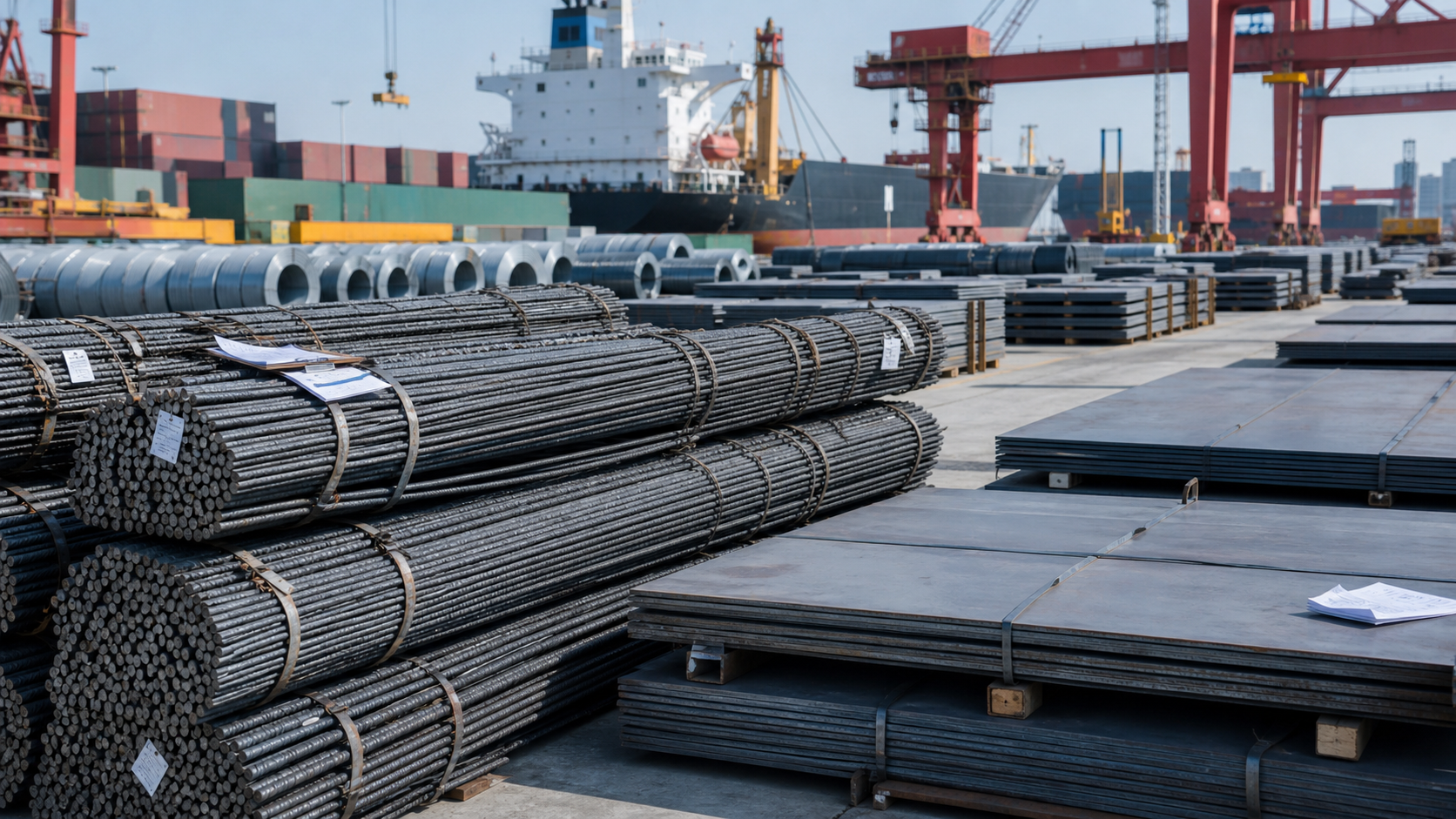
Shipping readiness is becoming a practical divider between inquiries that move and inquiries that stall. Bundled bars, flat plates, coils, pipe, and structural sections each bring different lifting, lashing, marking, inspection, and release requirements at the yard and port.
That matters when the product mix is uneven. A bar order with firm sizes, bundle weights, and markings may move faster than a flat-steel order that keeps changing thickness, destination, or document instructions. A lower headline price can lose value quickly if the cargo is not aligned with the loading plan.
4) YQ Steel's working view for August 26.
YQ Steel reads today's market as a selective export window rather than a broad-volume signal. Long-product demand still deserves attention, flat steel needs more careful demand confirmation, and every finished-steel inquiry should be tested against documentation and shipment execution before buyers compare prices.
Importers can improve their position by sending a complete order brief early: product family, grade, size range, coating or surface requirements, packing method, destination, loading window, and the commercial reason behind the purchase. In the current market, disciplined information helps suppliers match the right steel to the right route and avoid late-stage surprises.