1) The export headline is becoming a product-mix question.
IndexBox's summary of Fitch Ratings' 2026 view described a split in China's first-seven-month steel export pattern: finished-steel shipments weakened while semi-finished billet and slab exports strengthened. That is the central signal for buyers today because it changes how mills and traders judge which inquiries deserve production and shipment attention.
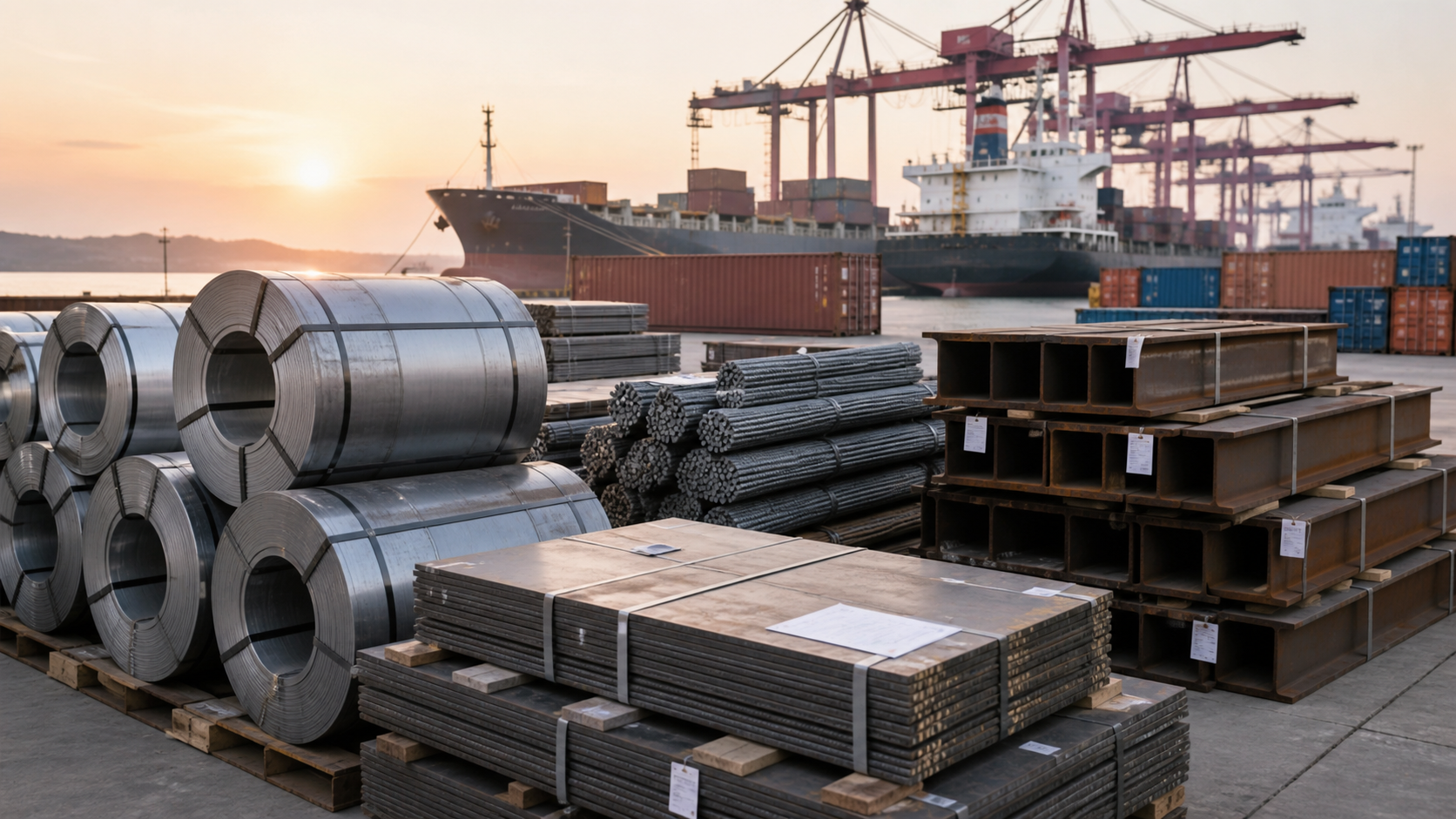
A softer finished-steel lane does not remove export supply. It makes product choice more important. Coil, sheet, plate, rebar, beams, angles and channels each carry different end-use logic, packing needs, certificate expectations and customs sensitivity, so a broad request for "steel" is less useful than a defined finished-product file.
2) Trade friction is still shaping destination discipline.
Recent market coverage also shows that trade-defense pressure remains part of the price. Latin American commentary pointed to Chinese steel tariffs and anti-dumping duties affecting flat-steel competition, including cold-rolled and coated sheet in regional markets. For a buyer, that means the destination cannot be treated as an afterthought after price is agreed.
Trade friction changes the practical questions at the inquiry stage. Buyers need to check HS code logic, final application, mill certificate language, coating or surface description, third-party inspection requirements and whether the consignee's import market has an active review, quota or duty exposure.
3) Shipment-ready orders have the better lane.
Port execution is the working divider between a quote and a shipment. Finished products require clear bundle weights, lifting points, shipping marks, label language, moisture protection, stacking method and loading window. When those details are late, the order becomes easier to delay in favor of cargo that can move cleanly.
The semi-finished flow matters here because billet and slab can sometimes absorb tonnage when finished-product channels are more difficult. Finished-steel buyers should not read that as a reason to wait passively; they should use it as a reminder to make their own orders easier to produce, inspect, document and load.
4) YQ Steel's working view for August 28.
YQ Steel reads today's market as a selective finished-steel window. The better buying lane is not simply the lowest offer; it is the order that matches a real project or resale channel, a workable destination, a practical vessel window and a paperwork trail that can withstand trade checks.
For late-August inquiries, buyers should send exact product, grade, dimensions, quantity split, packing method, destination port, target shipment period and certificate needs in the first message. In the current export mix, that clarity can shorten negotiation and reduce the risk of a cheap quote becoming a difficult shipment.